A vital bridge between U.S. military operational-level doctrine and tactical-level implementation, built for the professionals responsible for developing and prioritizing targets in the cyber domain.
CTDA centers on the Target Development phase of the Joint Targeting Cycle, set within the cyberspace operations framework and aligned to DoD and NATO joint and combined doctrine. It enriches existing Joint and Service doctrine; it does not replace it.
The Cyber Target Development Analyst course equips cyber professionals to understand and apply the joint targeting process. It focuses on the Target Development phase of the Joint Targeting Cycle, integrated within the cyberspace operations framework, and grounds every step in DoD Joint Targeting Development Standards.
Built by CSFI for personnel involved in joint targeting, the course pairs well-articulated definitions aligned to American and NATO joint and combined doctrine with best practices drawn from continuous military operations and exercises. Participants learn through worked examples and hands-on exercises, developing targets at the Basic, Intermediate, and Advanced levels and applying F2T2EA standards to dynamic targets.
Equipped with target development procedures, reference materials, and the Joint Targeting Standards, students leave able to develop and defend a cyber target across the full development phase.
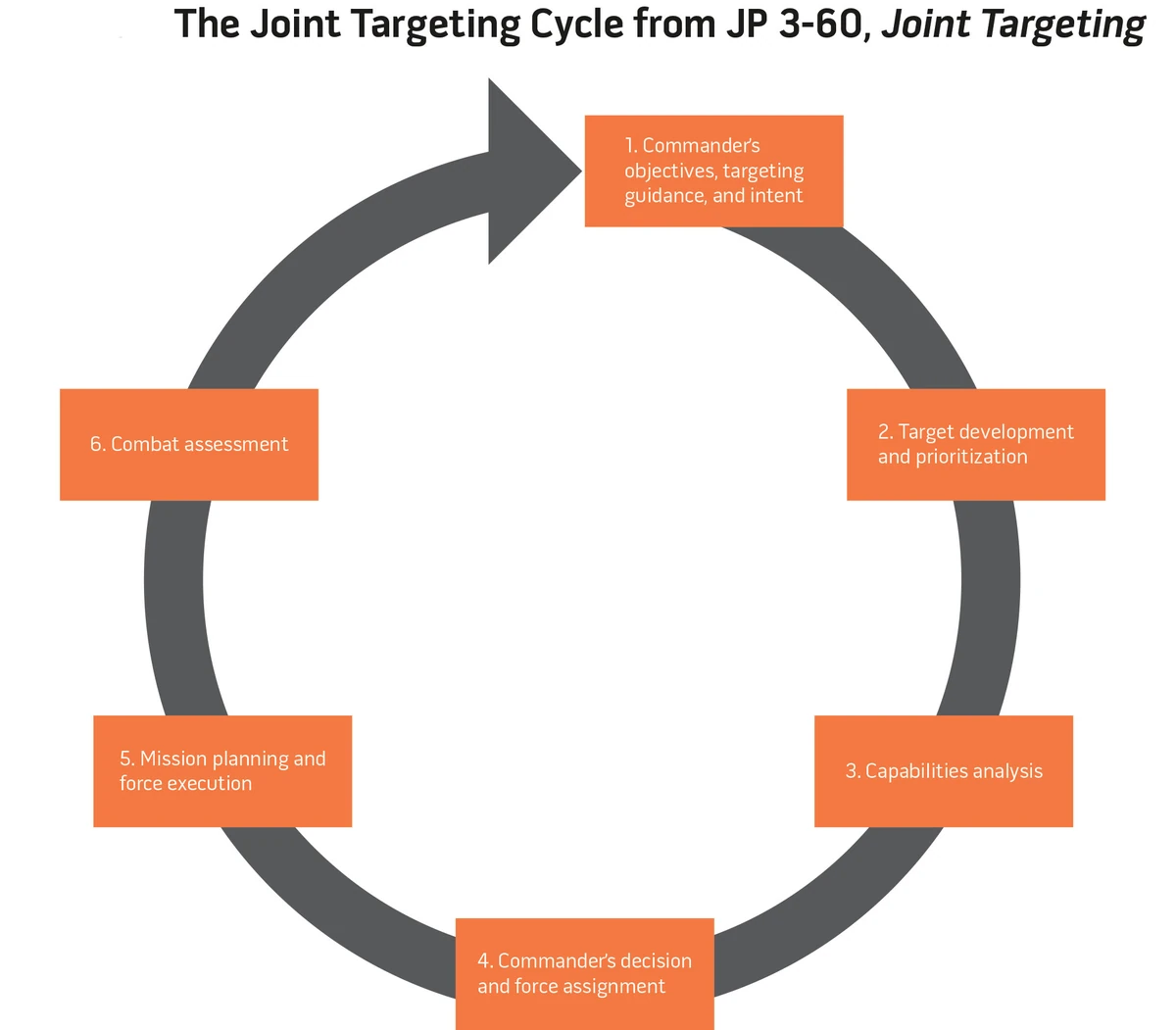
Apply joint targeting principles and the six-phase Joint Targeting Cycle to operations in and through cyberspace.
Build targets to DoD Joint Targeting Development Standards at the Basic, Intermediate, and Advanced levels.
Develop facilities, individuals, virtual entities, equipment, and organizations as cyber targets.
Validate and vet targets against ethical and legal cyber recommendations and operational needs.
Run target intelligence research and analysis to complete every element required for target development.
Weigh capabilities, weaponeering, aimpoints, and collateral damage for precise and proportionate effects.
Apply F2T2EA (Kill Chain) standards to time-sensitive, dynamic targets in the cyber domain.
Produce concise target statements: significance, description, functional characterization, critical elements, and intelligence gain or loss.
The program moves from joint targeting principles, through the integration of cyber effects and the phases of cyber target development, to the law of armed conflict and a hands-on capstone.
| Day | Modules | Focus |
|---|---|---|
| Day 1 | Modules 1 to 2 | DoD joint targeting principles and philosophies, then a full pass through the six-phase Joint Targeting Cycle and intelligence support to targeting. |
| Day 2 | Modules 3 to 6 | Integrating cyber effects with USCYBERCOM, then Phases 1 to 3 of cyber target development: end state, development and prioritization, and capabilities analysis. |
| Day 3 | Modules 7 to 8, Capstone | Law of armed conflict, rules of engagement, and the Tallinn Manual, a consolidated review, and a capstone that develops a cyber target to DoD joint targeting standards. |
Open any module to see what it covers. Expand the days below to follow the full arc from doctrine to capstone.
The doctrinal bedrock: what targets are, who owns targeting, and how the joint targeting enterprise is organized.
A walk through all six phases of the Joint Targeting Cycle and the intelligence that supports each step.
Where cyberspace operations and USCYBERCOM fit into joint targeting, and where the hard problems live.
Turning commander's intent into cyber objectives, effects, and tasks, with the right symbology and vocabulary.
Developing entities into targets and managing them through nomination, prioritization, and synchronization.
Matching capabilities to targets, then estimating feasibility, effects, and collateral damage.
The legal and ethical guardrails that govern cyber targeting, from LOAC to the Tallinn Manual.
A consolidated review that ties principles, the cycle, the cyber development phases, and the law together before the capstone.
Develop a cyber target to DoD joint targeting standards, applying every phase from end state to assessment against one of the five target types. The capstone proves the workflow end to end: research, development, validation, vetting, and a defensible target statement.
Throughout the course, analysts and operators develop one of the five target types recognized by DoD target development standards for cyber operations, completing the elements required for a sound, defensible target.
Doctrine and references
Fixed or functional sites that house, process, or route the systems behind a mission.
People whose role, access, or knowledge makes them decisive to a cyber operation.
Accounts, personas, services, and constructs that exist only in cyberspace.
Devices and hardware whose function or compromise produces an operational effect.
Groups and structures whose capability depends on the networks they rely on.
Persistent engagement involves targeting adversary cyber capabilities and their underlying infrastructure. This approach prevents adversary nations and non-state actors from launching disruptive and destructive cyberattacks in the first place.
USCYBERCOM
United States Cyber Command
CTDA is tailored for cyber personnel involved in joint targeting initiatives, where high relevance and practicality matter.
Admission to CTDA requires prior completion of CSFI's ICWOD course, the prerequisite that establishes the doctrinal foundation this course builds on.
View ICWOD
Cyber Target Development Analyst
CTDA · Issued by CSFI
Participants who complete the course and the capstone earn the Cyber Target Development Analyst (CTDA) certification from CSFI. The credential recognizes the ability to develop cyber targets to DoD joint targeting standards, across all five target types and the full Target Development phase of the Joint Targeting Cycle.
Tell us how you would like to attend and we will follow up with dates, scheduling, and logistics. Tuition is $3,000 per student. Seats are confirmed once ICWOD completion is verified.
Notice
The Cyber Target Development Analyst course enriches existing Joint and Service doctrine and is not a substitute for it. CSFI is an independent nonprofit. Course content aligns with publicly available U.S. and NATO joint and combined targeting doctrine, DoD target development standards, and the Tallinn Manual. Course delivery and the CTDA certification are provided by CSFI (Cyber Security Forum Initiative).